Are Video Podcasts Good for SEO?
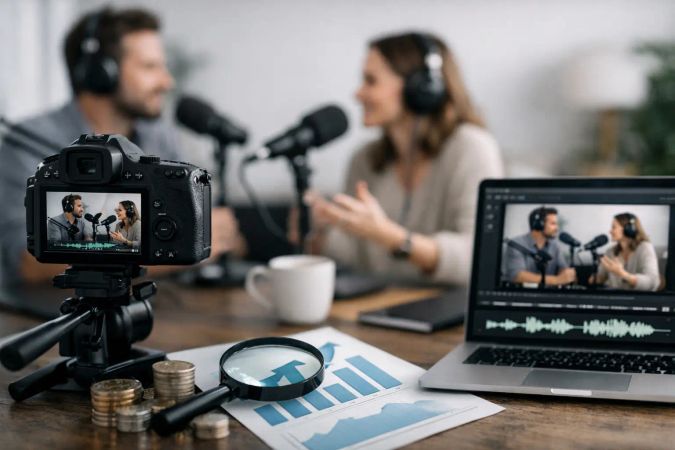
A polished video podcast episode can do more for search visibility than a month of disconnected social posts. For firms that sell expertise, the better question is not simply are video podcasts good for SEO, but whether they create enough usable search signals, authority, and distribution value to justify the investment. In many cases, they do. But only when the format is treated as a search asset, not just a recording.
For professional service brands, B2B companies, and organizations that need trust before conversion, video podcasts sit in a valuable middle ground. They are more scalable than custom commercials, more human than text alone, and more discoverable than one-off short videos with no larger content structure behind them. That makes them especially useful for businesses that need to show expertise consistently.
Are Video Podcasts Good for SEO? Yes, With Strategy
The short answer is yes. Video podcasts can support SEO because they expand the amount of searchable content tied to your brand, improve engagement across platforms, and create multiple content formats from one production cycle.
Search performance is rarely driven by a single media type. It comes from a pattern of relevance, authority, and consistency. A video podcast can contribute to all three. Each episode gives you a new topic cluster, a new opportunity to target industry terms, a new indexed page if published correctly, and a new reason for people to spend time with your brand.
That said, search engines do not rank a video highly just because it exists. A camera does not create SEO. Structure does. If an episode is uploaded with a vague title, no transcript, no supporting copy, and no clear topic alignment, the SEO value drops fast.
Why Video Podcasts Help Search Visibility
A strong video podcast creates more surface area for discovery. That matters because modern search behavior is fragmented. Prospects may find your company through Google, YouTube, AI-generated answers, branded search, or a topic-specific query tied to a problem they are trying to solve.
When a business publishes video podcasts consistently, it increases the number of indexed assets associated with its expertise. That can include episode pages, transcripts, summaries, clips, quote graphics, and supporting articles built from the same source material. One well-planned conversation can become an entire content ecosystem.
This is where the format becomes commercially useful. A legal firm discussing contract risk, a commercial real estate team covering market shifts, or a logistics company explaining port congestion is not just producing media. They are creating searchable proof of expertise. Search engines and users both respond well to that when the content is specific and relevant.
Video can also improve engagement signals. If users click through to an episode page and stay to watch, read, or explore related content, that often supports stronger page performance over time. It does not mean watch time alone guarantees rankings. It means useful media can improve the quality of the user experience, and search tends to reward that indirectly.
Where Video Podcasts Often Fail SEO
Most underperforming video podcasts are not failing because the format is weak. They are failing because the strategy is unclear.
A common problem is topic drift. Businesses record general conversations with no search intent behind them. The episode may sound polished, but if it does not answer real questions your market is asking, it adds little discoverability value.
Another issue is thin publishing. Some companies post the video to one platform and stop there. No transcript. No keyword-led episode page. No supporting copy. No segmentation into shorter assets. In that setup, the content has branding value, but limited SEO depth.
There is also the authority mismatch problem. A business may imitate entertainment podcasts when what its audience actually wants is clarity, insight, and confidence. Decision-makers in finance, law, commercial services, or B2B operations are not looking for filler. They want informed perspective. If the content feels casual without being useful, it will not build the kind of trust that supports conversions or branded search growth.
What Makes a Video Podcast SEO-Friendly
The best-performing business video podcasts are built around search intent from the start. That means each episode has a focused topic, a clear audience, and language that reflects how prospects actually search.
Titles matter. So do descriptions, chapters, and on-page copy. A transcript adds depth and accessibility while giving search engines more context. A dedicated page on your website matters more than relying only on third-party platforms, because your site is where authority and conversion value should compound.
Topical consistency is another major factor. A series about tax planning for business owners, maritime logistics issues, executive hiring strategy, or commercial property trends sends a clearer signal than random conversations spread across unrelated subjects. Over time, that consistency helps search engines associate your brand with a defined area of expertise.
Production quality matters too, though not in the way people often assume. SEO does not require cinematic excess. It requires credibility. Clean audio, strong framing, branded presentation, and a confident host all support trust. For serious industries, polish is not vanity. It is part of the message.
The Real SEO Advantage Is Content Multiplication
The biggest search benefit of video podcasts is not the episode alone. It is what the episode can produce.
One 30-minute discussion can become an optimized episode page, a transcript, several short video clips, quote-led social content, a topic article, an email feature, and future episode ideas based on audience response. That efficiency matters for firms that have deep expertise but limited time.
This is one reason the format works well for executive teams and professional service organizations. Instead of asking busy subject-matter experts to create content from scratch in five different formats, you capture insight once and distribute it strategically. That makes consistency more realistic, and consistency is one of the hardest parts of SEO-driven content marketing.
For brands in the South Bay Los Angeles business community, especially those competing in crowded service categories, that multiplication effect can create a real edge. Local authority is often built through repeated proof of relevance, not a single high-performing page.
Video Podcasts and E-E-A-T
If your business depends on credibility, video podcasts support the trust signals often associated with experience, expertise, authoritativeness, and trustworthiness.
A well-produced episode gives people a direct view into how your team thinks. They hear the depth of your knowledge, your ability to explain complexity, and your comfort within the subject. That is hard to fake. It is also why video can outperform generic written content in industries where buyers are evaluating competence as much as service offerings.
This matters for SEO because search visibility is increasingly tied to content quality and source credibility. Search engines want to surface content that appears useful and reliable. Buyers want the same thing. Video podcasts can help satisfy both when they are focused, informed, and connected to a clear business niche.
When Video Podcasts Are Not the Best SEO Move
There are trade-offs. If your company cannot commit to recurring production, publishing discipline, or topic planning, a video podcast may become an expensive archive of missed opportunities. A strong written content program could deliver better ROI in that case.
The format also may not fit every audience stage. If prospects mainly need quick answers to very specific search queries, short educational videos or tightly targeted articles may perform better than long-form conversations. Video podcasts are strongest when your sales cycle benefits from thought leadership, trust-building, and repeated exposure.
That is why the best approach is usually not either-or. It is integrated. Use the podcast to generate authority-rich source material, then turn that material into search-focused assets across your site and channels.
So, Are Video Podcasts Good for SEO for B2B Brands?
For many B2B and professional service brands, yes. They are especially effective when the business has real expertise, a clear niche, and a plan for distribution. They help companies show what they know, create more discoverable content, and strengthen the connection between visibility and trust.
At Voxel Micro Video Labs, that is the practical value of a video-first content model. The goal is not to produce content that simply looks polished. The goal is to create media that carries authority into search, supports discoverability, and keeps working long after the recording day ends.
If you are evaluating whether to invest, think less about whether podcasting is trendy and more about whether your expertise deserves a better delivery system. The right video podcast does not replace SEO. It gives SEO more substance to work with.