Brand Video vs Social Content: What Wins?
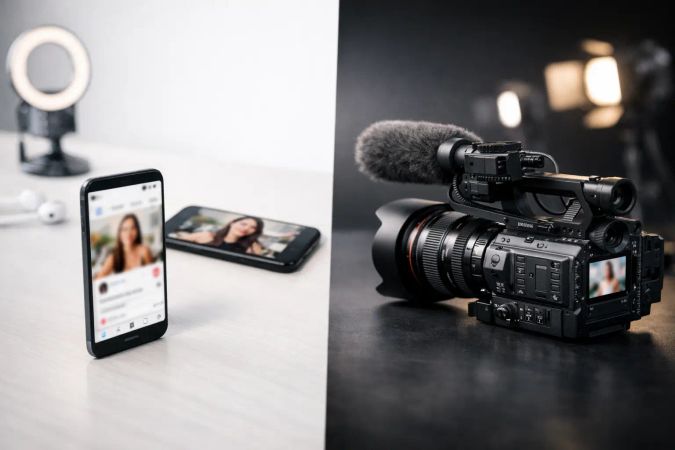
A polished brand film can make your company look established. A steady stream of short social clips can keep you visible week after week. But when leadership teams ask which one actually moves the business, the real question is usually about strategy, not format. In the brand video vs social content debate, most companies are not choosing between good and bad content. They are choosing between different jobs that video needs to do.
That distinction matters more for professional services, B2B firms, and expertise-driven companies than it does for lifestyle brands. If you sell legal guidance, financial insight, logistics capability, or commercial real estate knowledge, your content has to build trust before it asks for attention. It also has to keep working after the first post goes live.
Brand video vs social content: the core difference
Brand video is built to define who you are. Social content is built to keep you in the conversation. They can overlap, but their primary roles are different.
A brand video usually has a longer shelf life, a higher production standard, and a clearer message about your company position, value, and credibility. It is the piece you use when someone is evaluating whether your business is serious, capable, and worth contacting. It often sits on your website, sales pages, proposal decks, recruiting materials, or email nurture flows.
Social content is more frequent, more flexible, and usually more fragmented by design. It is how your company shows up consistently in feeds, answers timely questions, reacts to market conversations, and stays visible to people who are not yet ready to buy. It is often less polished, but that is not necessarily a weakness. Speed and relevance can outperform polish when the goal is attention and repetition.
For decision-makers, the mistake is treating these formats as interchangeable. A social clip cannot always carry the burden of brand positioning. A cinematic brand piece cannot replace the volume needed for ongoing discoverability.
What brand video does best
Brand video is strongest when your audience needs confidence before they need details. It gives shape to your expertise. It puts faces, tone, and professionalism behind your message. If your sales cycle involves trust, scrutiny, or multiple stakeholders, that matters.
For example, a commercial real estate firm may need a brand video that communicates market knowledge, transaction experience, and executive presence. A tax advisory firm may need one that signals precision, clarity, and authority. A logistics company may need one that makes complex capabilities feel organized and dependable. In each case, the video is not there to chase quick engagement. It is there to reduce doubt.
Brand video also performs well in places where prospects are actively evaluating your company. Your homepage, about page, pitch presentations, speaking event intros, investor communications, and recruiting pages all benefit from a strong foundational video asset. It can shorten the distance between awareness and trust.
The trade-off is that brand video alone rarely creates enough ongoing momentum. It may impress prospects, but it does not automatically keep your business visible in search, social, or industry conversations. If you produce one polished piece and stop there, your market will remember the effort less than you expect.
What social content does best
Social content wins on consistency, speed, and volume. It gives your brand more chances to be seen, more entry points into audience pain points, and more signals that your company is active and informed.
For B2B companies, this matters because buyers often watch quietly before they ever reach out. They may see a short clip from your managing partner, a quick breakdown from your operations lead, or a video podcast snippet where your team explains a common industry issue. None of those moments has to do all the heavy lifting. Together, they build familiarity.
Social content is also better suited for testing. You can learn what topics get response, what language your audience reacts to, and what themes deserve deeper treatment. That makes it useful far beyond awareness. It becomes a feedback loop.
The downside is obvious. Social content can create noise without building authority if it is reactive, generic, or disconnected from your actual business goals. Many companies post frequently but say very little. They gain impressions and lose positioning.
That is why short-form content works best when it is anchored to a larger messaging system. Otherwise, it becomes content for content's sake.
Why video podcasts change the equation
This is where many companies find the right middle ground. Video podcasts are not just another content format. They are a production engine.
A well-structured video podcast gives you something brand video and one-off social clips do not provide on their own: depth plus repeatability. You can capture executive perspective, subject-matter expertise, market commentary, client education, and industry relevance in a format that feels credible rather than overly scripted.
From one recording session, you can create a long-form authority asset, several short social clips, website content, search-oriented video pages, and material for email and sales enablement. That makes video podcast marketing especially valuable for professional service firms that need consistent visibility but cannot justify reinventing the wheel every week.
It also supports discoverability in a way traditional brand video often does not. A brand film may explain who you are once. A recurring video podcast helps answer what you know, how you think, and why your perspective deserves attention. That ongoing signal is useful for search visibility, audience trust, and lead generation.
For firms in South Bay Los Angeles and nearby business communities where relationships still matter, this approach also has a practical advantage. It helps local companies turn expertise into a steady public presence without sacrificing professionalism.
When to prioritize brand video
If your company has weak positioning, an outdated online presence, or no clear foundational story, start with brand video. The same applies if you are preparing for a website relaunch, entering a new market, recruiting senior talent, or trying to improve conversion from existing traffic.
A good brand video can sharpen your message internally as much as it helps externally. It forces leadership to clarify what the business stands for, who it serves, and why it is different. That strategic clarity often improves everything that comes after, including social content.
Still, brand video should not be treated as a standalone campaign. It works best as the anchor asset in a broader content system.
When to prioritize social content
If your company already has a strong positioning foundation but suffers from low visibility, inconsistent posting, or weak audience engagement, social content deserves immediate attention. The same is true if your team has insight worth sharing but no reliable cadence for getting it into the market.
Social content is especially effective when your buyers need repeated exposure before they engage. That is common in B2B services, where trust builds over time and purchase intent does not always show up in obvious ways.
What matters is discipline. Random posting does not create momentum. Consistent topic pillars, recurring on-camera voices, and clear calls to relevance do.
The better answer is usually both, but not equally
Most businesses do not need to ask brand video vs social content as if one has to replace the other. They need to decide which one should lead and how the second supports it.
If credibility is your immediate gap, lead with brand video and build social content around it. If visibility is your immediate gap, use social content to create market presence while developing stronger core brand assets. If you want efficiency, build around a video podcast workflow that can feed both.
That is usually the smartest model for executive teams that care about time, brand control, and measurable output. You get the authority of long-form conversation, the consistency of social distribution, and the production quality needed to reflect a serious business.
The goal is not more video. It is more useful video. Content should help your company get found, get trusted, and get remembered by the right people. When your video strategy is built around that standard, the format question gets easier - and the business results get clearer.
The strongest companies do not ask whether they should look polished or stay active. They build a content system that does both, with every asset pulling its weight.