How to Launch a Video Podcast That Performs
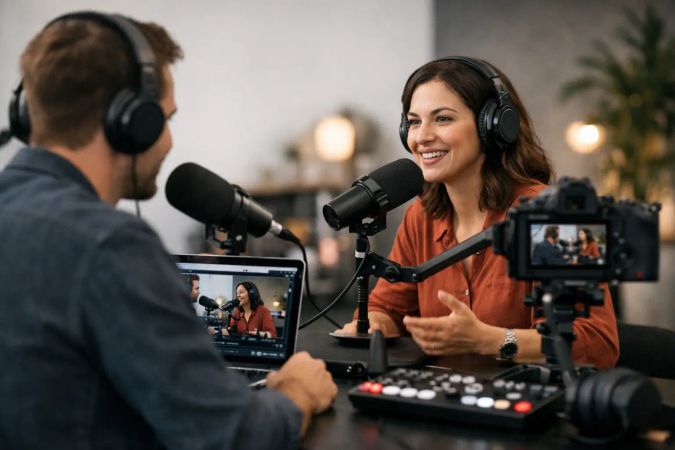
Most business podcasts fail before episode five, not because the host lacks expertise, but because the format was never built for consistency, visibility, or business value. If you want to know how to launch video podcast content that actually supports growth, start by treating it as a strategic media asset, not a side project.
For professional service firms, B2B teams, and founder-led companies, a video podcast can do far more than fill a YouTube channel. It can create searchable proof of expertise, generate reusable clips, strengthen trust with buyers, and give your brand a repeatable way to show up with substance. The catch is that strong results usually come from strong structure.
How to launch video podcast with a business goal first
The first decision is not cameras, mics, or set design. It is why the podcast exists. If the answer is "because everyone is doing video," you will have a hard time sustaining it. A business podcast works best when it supports a clear commercial purpose.
That purpose might be thought leadership in a crowded market. It might be improving search visibility around your service categories. It might be shortening the trust gap for prospects who need to see and hear your expertise before they schedule a call. In some firms, it is also a business development tool, especially when guests are clients, industry partners, or adjacent experts.
This is where many launches drift off course. They chase broad reach when what they really need is qualified relevance. A commercial real estate advisor does not need millions of views. They need the right local investors, operators, and referral partners to see consistent, credible content. A tax strategist or logistics executive has the same challenge. Narrow focus often produces better business results than broad appeal.
Choose a format you can sustain for 6 months
A video podcast should look polished, but the format needs to be realistic. Consistency beats ambition that burns out in a month.
For most business brands, there are three workable models. A solo expert format is efficient and strong for authority building, but it requires a host who can speak clearly without much prompting. An interview format creates variety and relationship value, though scheduling becomes the main friction point. A co-hosted format can feel dynamic and conversational, but only if both voices are equally prepared and aligned.
Episode length depends on the subject and the audience. A 20 to 30 minute episode is often a strong starting point for executives and professionals because it is long enough to carry substance without becoming difficult to schedule or edit. Longer is not better unless the conversation truly earns it.
Just as important, decide what each episode is trying to do. Some podcasts educate. Some comment on industry shifts. Some answer buyer questions. Some build local or sector authority. The strongest shows usually stay within a defined lane so the audience knows what to expect.
Build your show around discoverable topics
If your video podcast is meant to support marketing, topic selection cannot be random. It should align with the questions your market already asks, the problems your buyers already face, and the expertise you want associated with your brand.
That means planning episodes around search behavior, recurring client conversations, and strategic themes in your industry. A law firm might cover contract mistakes, dispute prevention, or changes in regulation. A logistics company might address port congestion, warehousing risk, or supply chain forecasting. A financial firm might speak to tax planning, cash flow management, or succession strategy.
This is one of the biggest advantages of video podcast marketing. One good episode can support multiple discovery paths. The full video can live on your primary channel. The audio can extend to podcast platforms. Short clips can reinforce key points on social channels. The transcript and topic focus can strengthen your broader search presence if the content is produced and published with intent.
The practical takeaway is simple. Start with 10 to 15 episode ideas before you record the first one. If you cannot map out a meaningful first season, the concept is not ready yet.
Production quality matters because trust is part of the sale
In entertainment, audiences will forgive rough production if the personality is strong. In professional services and B2B markets, the standard is different. People are evaluating your credibility while they watch.
That does not mean your show needs to feel expensive or overproduced. It does mean poor audio, inconsistent lighting, awkward framing, and distracting backgrounds can quietly erode confidence. Buyers may not say it out loud, but they will connect production quality with attention to detail.
A clean, repeatable studio setup solves more than aesthetics. It improves efficiency. It reduces technical surprises. It creates a consistent visual identity across episodes. For businesses in South Bay Los Angeles and the Harbor Area, working with a studio partner can also remove the hidden operational burden that stalls internal teams after the initial enthusiasm wears off.
The right production level depends on your brand. A shipping and logistics firm may want a straightforward, authoritative setup. A technology company may prefer a sharper, more modern look. A chamber or association may need a flexible format for guests. The point is not to chase trends. It is to create an environment that supports trust and repeatability.
Prepare the host like a communicator, not just a subject-matter expert
Deep expertise does not automatically translate on camera. Many strong executives are excellent in client meetings and far less comfortable under lights with a microphone in front of them.
That is normal. Hosting is a communication skill, not just an industry credential.
The fix is structure. Build episode outlines instead of full scripts so the conversation sounds natural. Define the opening question, the core talking points, and the closing takeaway. If guests are involved, prepare them in advance so the discussion stays sharp and avoids vague, circular answers.
A good host does not need to sound like a broadcaster. They need to sound clear, confident, and useful. That means shorter answers, direct language, and a habit of explaining complex topics in plain English. For industries like legal, finance, and commercial real estate, that clarity is often what separates content people skip from content they trust.
Plan the distribution before the first recording day
A surprising number of companies record a strong episode and then ask what to do with it. By then, momentum is already slipping.
Launch planning should include distribution from the start. Decide where the full episodes will live, how audio versions will be published, what short-form assets will be cut from each episode, and who owns the publishing calendar. If no one is responsible for post-production rollout, the content will likely underperform no matter how well it was filmed.
This is also where expectations need to be realistic. A video podcast rarely produces immediate pipeline from episode one. More often, it compounds. It gives prospects more ways to find you, more proof to evaluate, and more confidence in your expertise over time. The businesses that benefit most are the ones that treat it like a recurring visibility system rather than a one-off campaign.
Measure the right outcomes
Views matter, but not as much as most businesses think. If your show gets modest view counts but helps you win better conversations, improve search presence, and stay top of mind in your market, it is doing its job.
Look at signals such as audience retention, branded search lift, inbound mentions, guest relationship value, content reuse, and whether the show is helping your team answer common buyer questions more efficiently. In B2B and professional services, a focused audience of the right decision-makers is usually worth more than broad attention from people who will never buy.
This is one reason video podcasts work so well for serious industries. They create durable proof. A prospect who watches three strong episodes has a very different level of trust than someone who only scanned your homepage.
How to launch video podcast content without creating internal drag
If your team is already stretched, the launch plan has to respect that reality. The smartest approach is usually to batch production, narrow the format, and remove unnecessary decisions.
Record multiple episodes in one session. Use a standard visual setup. Keep a repeatable run-of-show. Create a content pipeline that turns one recording block into full episodes, short clips, quotes, and supporting assets. This reduces scheduling friction and gives the show a better chance of surviving beyond the launch phase.
It also helps to decide what should stay in-house and what should not. Some teams can own topic planning and guest selection but need outside support for filming, editing, and packaging. Others want a more complete production partner because they value speed and consistency over piecemeal coordination. There is no single right model, but there is a wrong one: building a podcast workflow that depends on spare time you do not actually have.
A strong video podcast does not start with gear. It starts with clarity, structure, and the discipline to publish something your market will recognize as credible. If you build it that way, each episode becomes more than content. It becomes evidence of expertise your audience can find, watch, and remember when timing matters.