How to Record Studio Podcasts That Perform
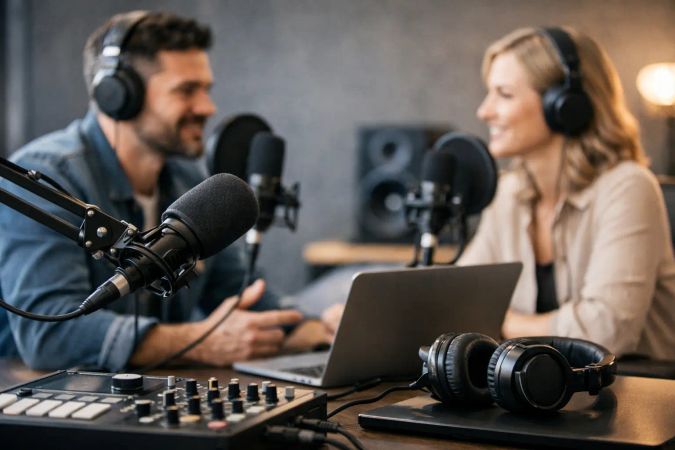
A podcast that sounds thin, looks flat, or rambles without direction does more than waste production time. It weakens credibility. If you want to know how to record studio podcasts in a way that actually supports business growth, the answer starts before anyone sits down at a mic.
For professional firms, B2B brands, and subject-matter experts, a studio podcast is not just content. It is a trust asset. When done well, it gives your audience a reason to believe you know your field, understand their problems, and can communicate with clarity. It also creates a library of media that can support search visibility, social distribution, sales follow-up, and long-term brand authority.
How to record studio podcasts with a business strategy
The biggest mistake companies make is treating podcast production as a technical exercise. Good cameras and microphones matter, but they do not fix weak positioning. Before recording, decide what the podcast needs to do for the business.
That usually means answering a few practical questions. Who are you trying to reach? What problems do they need solved? What topics match your expertise and sales process? What kind of conversations would a prospect actually watch or listen to? A law firm, logistics company, commercial real estate team, or financial advisory practice will not benefit from the same editorial approach as an entertainment brand.
The strongest studio podcasts are built around repeatable themes. Instead of chasing random topics, create a structure that supports authority. That could mean market insight episodes, client education episodes, industry interview episodes, or executive commentary on timely changes in your sector. This gives the content consistency, and consistency is what turns a podcast from a one-off media project into a discoverable business asset.
The studio setup matters, but not in the way most people think
Many people assume studio quality is mostly about expensive gear. In practice, the recording environment and setup discipline matter just as much. A controlled studio gives you cleaner audio, predictable lighting, a professional visual frame, and a smoother production workflow. That matters because viewers notice distractions quickly, especially in industries where trust and polish influence buying decisions.
Audio should be the first priority. If the sound is hollow, noisy, or inconsistent, audiences leave. A good studio podcast setup typically includes broadcast-style microphones, audio interfaces or mixers, sound treatment, headphones for monitoring, and an engineer or producer who can catch issues in real time. You do not need the most expensive equipment on the market, but you do need equipment that fits the format and is set up correctly.
Video quality comes next, especially if your podcast is part of a broader marketing strategy. Video podcasts give you more usable content. You can publish full episodes, short clips, quote graphics, and promotional cutdowns from a single recording session. For businesses focused on visibility and lead generation, that extra content value is hard to ignore.
A multi-camera setup usually works best in studio environments because it creates visual variety and makes the conversation feel more polished. But there is a trade-off. More cameras and more production complexity mean more setup time, more editing decisions, and higher cost. If speed and consistency matter more than cinematic style, a simpler setup may be the smarter choice.
Pre-production is where strong podcast episodes are won
If you want to know how to record studio podcasts efficiently, pay attention to pre-production. This is where business-focused podcasts separate themselves from hobby content.
Start with an episode objective. Every recording should have a clear purpose. Maybe the goal is to answer a common client question, address a new regulation, explain a market shift, or feature a strategic partner. That objective should shape the conversation, the talking points, and the call to action.
From there, build a concise run of show. This does not mean scripting every sentence. In fact, over-scripting can make experienced professionals sound stiff. A better approach is to create a conversational structure with opening context, key discussion points, examples, and a strong closing takeaway. This keeps the episode focused without losing authenticity.
Guest preparation is just as important. Many business leaders are experts in their field but not natural on-camera talent. Give them a short briefing before the session. Explain the audience, episode angle, expected tone, and approximate length. Let them know they do not need to sound perfect. They need to sound credible, clear, and useful.
Recording day should feel controlled, not rushed
A studio podcast session runs better when the process is designed to reduce friction. That starts with arrival time, mic checks, framing, and a quick conversation before recording begins. People perform better when they know what to expect.
Hosts should avoid reading from notes. Instead, keep bullet prompts nearby and focus on direct conversation. Eye contact, pacing, and natural reactions matter more than polished delivery. Audiences are usually forgiving of small verbal stumbles. They are less forgiving of content that feels generic or over-rehearsed.
Episode length depends on topic depth and audience behavior. A 20-minute episode can be stronger than a 50-minute one if it gets to the point and delivers value. For busy executives and professional audiences, concise often wins. If the subject requires depth, longer can work, but only when the discussion earns the time.
During recording, a producer should listen for more than sound quality. They should watch for rambling answers, jargon overload, missed opportunities, and moments worth repurposing later. This is one reason studio production offers real business value. You are not just capturing media. You are shaping communication that can perform across multiple channels.
How to record studio podcasts for video, audio, and search
Recording is only part of the job. If your podcast is meant to support marketing, it needs to be built for distribution from the start.
That means choosing topics people actually search for, naming episodes clearly, and structuring the conversation so useful clips can be extracted later. A vague title may sound clever, but it will not help someone find the content. A direct topic framed around a real industry question usually performs better.
It also helps to think beyond the full episode. One studio session can produce a long-form video, an audio episode, short clips for social platforms, quote-based content, blog support material, and sales-enablement assets. This is where podcasting becomes commercially efficient. Instead of creating one asset, you create a content system.
For B2B brands, discoverability matters as much as production quality. A polished podcast that no one finds has limited value. A strategically planned podcast can support SEO, strengthen branded search, and create more digital proof points around your expertise. That is especially useful for firms in competitive categories where buyers research providers before making contact.
Editing should protect clarity, not overproduce the conversation
There is a balance to good podcast editing. Clean up distractions, tighten pacing, and remove obvious dead spots, but do not edit so aggressively that the conversation loses its natural rhythm. Business audiences want polish, but they also want signal. If the edit starts feeling too manufactured, trust can drop.
Audio should be leveled and clear. Video should have consistent color, framing, and smooth cuts. Branded elements can help, but they should support the message rather than compete with it. Intro sequences, lower thirds, and subtle graphics are useful when they create orientation and professionalism.
Captions are worth including, especially for video distribution. Many people watch clips with the sound off at first. Captions also improve accessibility and make the content easier to follow in fast-scroll environments.
Should you build in-house or use a studio partner?
It depends on your internal capacity, content goals, and tolerance for production management. In-house recording can work if you have the staff, equipment, space, and discipline to produce consistently. The trade-off is that most businesses underestimate the time involved. Setup, troubleshooting, editing, guest coordination, and publishing all add up quickly.
A professional studio partner makes more sense when you want reliable quality, a stronger on-camera environment, and a faster path from expertise to publishable media. That is especially true for firms where leadership time is expensive and every content session needs to create measurable value.
In markets like South Bay Los Angeles and the surrounding business communities, where professional reputation carries real weight, production quality can influence how seriously your brand is perceived. A strong studio environment helps experts show up at their best without turning the process into a second full-time job.
The real goal is not recording more content
The goal is recording content that keeps working after the cameras stop. The best studio podcasts help prospects understand your expertise before the first meeting. They give sales teams something useful to share. They create proof of consistency, professionalism, and market knowledge.
That is why learning how to record studio podcasts matters. Not because podcasting is trendy, but because the right format can turn conversations into visibility, authority, and lead-generating media. If your business already has the expertise, the smarter move is to record it well and make it discoverable.