How to Repurpose Interview Clips That Perform
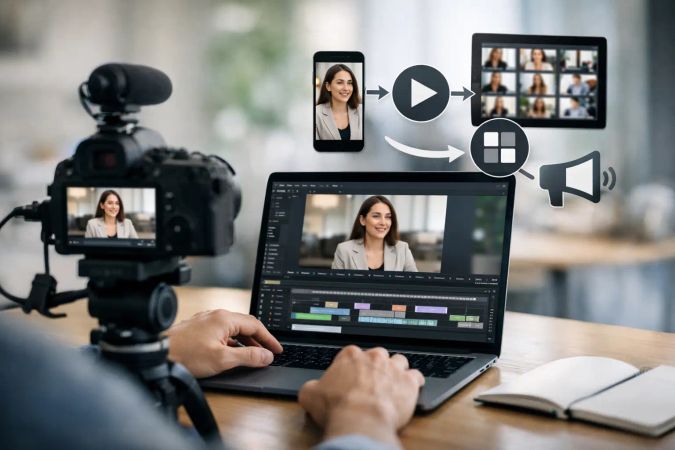
A strong interview can give you more than one good video. It can give you a month of content, sharper positioning, and a library of proof points your market can actually find. That is the real value behind learning how to repurpose interview clips. For B2B brands, especially in professional services, one recorded conversation can become a practical engine for visibility, authority, and lead generation.
The mistake most companies make is treating the interview as the final asset. They publish the full episode, post one announcement, and move on. That leaves most of the value on the table. Interview content works harder when you break it into formats built for search, social reach, sales conversations, and ongoing brand credibility.
Why interview clips outperform generic brand content
Interview footage tends to have something polished scripts often miss - specificity. A managing partner explaining a tax issue, a logistics executive unpacking port congestion, or a commercial real estate advisor clarifying a market shift creates natural authority. People trust informed answers more than slogans.
That matters for video podcast marketing. Interviews create material with depth, named problems, and useful language your audience is already searching for. Instead of broad claims about expertise, you have a real person addressing real business questions in plain terms. That makes clips more shareable, more searchable, and more persuasive.
There is also an efficiency advantage. If your team already invested time in booking a guest, preparing questions, and recording a quality conversation, the expensive part is done. Repurposing is where you extend return on that production effort.
How to repurpose interview clips with a clear content plan
Start before editing. Repurposing works best when you review the interview for content angles, not just for clean cuts. A 30-minute conversation usually contains several distinct assets hiding inside it: a strong opinion, a timely insight, a client-facing explanation, a myth to correct, and a short moment that feels personal enough to humanize the brand.
The first pass should identify topic segments rather than clip length. Ask what each section can do for the business. One answer may fit a thought leadership post. Another may become a search-focused article. A concise, quotable section may be ideal for LinkedIn or a vertical short.
This is where many teams get too literal. They trim random 30-second snippets and call it repurposing. That produces content, but not strategy. A better approach is to assign each clip a job. Is it supposed to drive reach, support SEO, nurture trust, help sales, or reinforce the company’s point of view? Once you know the role, the edit gets easier.
Pull the full episode apart by intent
Most interview recordings can be divided into three content tiers. The first is the flagship asset, usually the full video podcast episode or long-form interview. This gives you depth and can live as the primary authority piece.
The second tier is your mid-length content. These are focused excerpts of one to three minutes centered on one business question. For executive audiences, this format often performs better than very short clips because it keeps enough context to sound credible.
The third tier is your short-form distribution layer. These are the 15 to 45 second cuts that highlight a sharp answer, a surprising stat, or a concise takeaway. They work well when the point is immediately clear without extra setup.
Each tier has value, but they do different jobs. The full episode builds depth. Mid-length clips support trust and education. Short clips create awareness and repeated visibility.
Turn interview clips into search assets, not just social posts
If your repurposing plan ends at social media, you are underusing the content. Interview clips can support search performance when the topics are translated into text-based assets with the same core message.
For example, if a guest explains how businesses should prepare for changes in lending conditions, that segment can become a short article, a Q&A post, an email to prospects, and on-page copy supporting a service area. The point is not to duplicate the transcript word for word. The point is to reframe the same expertise for different discovery channels.
This is especially useful for firms in legal, finance, logistics, and consulting where buyers often search for answers before they speak to a provider. A well-cut interview segment gives you the language. A written companion asset gives you another opportunity to rank and reinforce authority.
In practice, one interview clip can become a headline quote, a transcript excerpt, a blog section, and a sales follow-up asset. That kind of repurposing compounds visibility because the same insight appears in formats people consume differently.
What to do with interview clips after publishing the episode
The best publishing schedule is rarely all at once. Release the full interview first if it anchors your content strategy, then stagger supporting clips over the next few weeks. This keeps the original conversation active longer and gives your team multiple touchpoints without having to create something new every day.
Timing matters. A short clip posted the same day as the full episode can help drive attention. A more specific excerpt a week later can revive interest with a different angle. A quote graphic or written takeaway later in the month can extend the life of the same conversation again.
This slower rollout is often better for B2B audiences. Decision-makers do not always engage on the first impression. Repetition across formats helps your message register without feeling repetitive.
Match the format to the platform and the buyer
Not every clip belongs everywhere. A tightly edited vertical video may work well for reach, but a more detailed horizontal segment may better serve your website, email list, or sales team. Repurposing should respect the audience’s context.
If you are speaking to a CFO, attorney, broker, or operations leader, clarity beats trend-chasing. Fast edits and captions can help, but the substance has to stay intact. Overediting can make serious expertise feel less credible.
That trade-off matters. Content made purely for attention can lose the nuance that makes interview footage valuable in the first place. On the other hand, leaving every answer long and untouched can reduce engagement. The right balance depends on whether the clip is meant to attract new viewers or persuade qualified prospects.
Build recurring themes from multiple interviews
The smartest repurposing strategy is not only clip-by-clip. It is pattern-based. After a few interviews, certain themes will repeat. Clients ask similar questions. Industry leaders raise the same concerns. Market conditions keep pushing the same decision points.
When that happens, your clips stop being isolated pieces of content and start becoming a body of authority. You can group segments around topics like compliance risk, market trends, hiring challenges, tax planning, or supply chain visibility. That helps your brand sound consistent and informed rather than random.
For a video podcast marketing strategy, this is where momentum starts to build. Instead of promoting one episode at a time, you are creating recurring editorial lanes your audience can recognize. That is more useful for SEO, stronger for brand memory, and better for long-term trust.
Production quality still matters in repurposing
Repurposing does not fix weak raw footage. If the audio is rough, the framing is distracting, or the guest looks underlit and uncomfortable, every cut inherits that problem. That is one reason studio-based interview production tends to outperform improvised setups for businesses that need credibility.
The better the original recording, the more flexible the repurposing process becomes. Clean sound supports transcripts. Strong visuals make clips usable across channels. Consistent branding helps every asset feel connected.
For companies in South Bay Los Angeles and the Harbor Area, where business relationships often grow through trust and reputation, polished interview content can make a measurable difference. It signals seriousness. It also makes it easier to turn one conversation into a sustained campaign rather than a one-off post.
A simple standard for deciding what is worth clipping
If a segment answers a real client question, clarifies a complicated issue, challenges a common misunderstanding, or reveals a useful point of view, it is probably worth repurposing. If it only sounds nice in the moment but says nothing specific, it usually will not travel well.
That standard keeps your content focused on business outcomes. It also helps avoid the common trap of posting clips simply because they exist. More content is not the goal. More useful, discoverable, trust-building content is.
When interview clips are repurposed well, they stop being leftovers from a longer recording. They become one of the most efficient ways to turn expertise into reach, search visibility, and sales support. If your team is already making the effort to capture expert conversations, the next step is to treat every interview like the start of a content system, not the end of a production day.
A good interview should keep working long after the cameras stop.