How to Film Executive Interviews Well
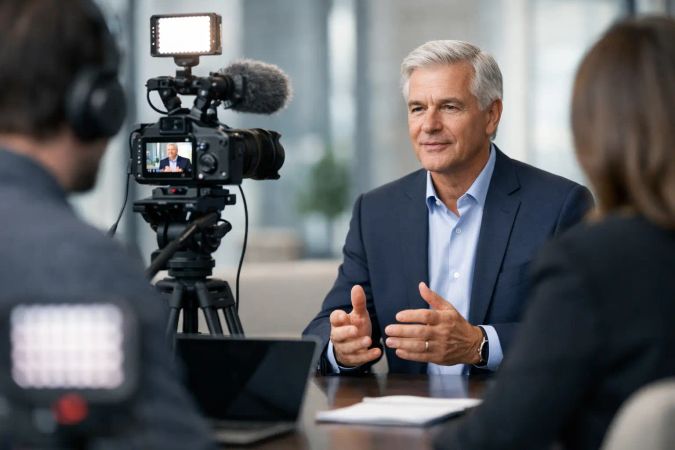
An executive interview can either make a company look credible or expose every weak point in its message. The camera catches hesitation, vague talking points, poor lighting, and flat delivery fast. If you want to know how to film executive interviews in a way that builds trust and supports real business goals, you need more than a decent camera setup. You need structure, preparation, and a clear reason the interview exists in the first place.
For professional services firms, B2B companies, and leadership teams, executive interview content is not just a brand video. It can fuel video podcasts, thought leadership clips, landing page assets, recruiting content, social cutdowns, and search-friendly media that keeps working long after the shoot. That is why the production approach matters.
Start with the business objective
Before you choose lenses or lighting, decide what the interview needs to accomplish. Some executive interviews are designed to reassure investors or clients. Others are meant to explain a service, humanize leadership, support a campaign, or generate a library of clips for ongoing content distribution.
That decision shapes everything else. If the goal is authority, the questions should invite analysis and perspective. If the goal is lead generation, the conversation should move closer to client pain points, outcomes, and market insight. If the interview is part of a video podcast strategy, the structure needs enough range to create multiple usable excerpts without sounding repetitive.
A lot of executive interviews fail because they aim for general brand awareness and end up saying very little. Specificity makes the footage stronger and more useful.
How to film executive interviews with stronger on-camera presence
Executives are often confident in meetings and less comfortable on camera. That does not mean they are poor speakers. It usually means they are switching from a conversational environment to a performance environment.
The fix is not to script every word. Over-scripted answers sound stiff, especially with senior leaders who are used to speaking from expertise. Instead, prepare structured prompts. Give them a clear topic, a point of view to address, and a sense of who the audience is. That keeps delivery natural while protecting message quality.
It also helps to avoid opening with the hardest question. Start with familiar territory so the speaker settles into a rhythm. Once they relax, the interview gets sharper. You will hear more conviction, more specificity, and fewer generic lines that sound like they came from a press release.
Eye line matters here too. If you want a polished, editorial feel, have the executive look slightly off camera at the interviewer. If the goal is a more direct address for marketing or recruiting, looking into the lens can work well. Neither is universally better. It depends on whether you want the audience to feel like they are observing a conversation or being spoken to directly.
The setup should look credible, not distracting
When people search how to film executive interviews, they often focus on gear first. Gear matters, but the bigger issue is whether the visual environment supports credibility.
A law firm partner, CFO, or logistics executive should not look like they were dropped into a random room with a plant in the corner. The setting needs to match the level of authority you want to project. That could be a controlled studio, a refined office backdrop, or an environment tied to the business itself. The background should add context without competing for attention.
Lighting should be soft, directional, and consistent. You want definition in the face, clean catchlights in the eyes, and enough separation from the background to create depth. Flat overhead lighting makes people look tired. Mixed color temperatures make the shot feel unpolished. Small technical mistakes affect perceived trust more than many teams realize.
Framing should also serve the message. A medium close-up usually works best for executive interviews because it feels personal without becoming uncomfortable. Wider shots can work when the space adds meaning, but if the background is not helping, it is just extra visual noise.
Audio quality decides whether people keep watching
Viewers forgive a lot before they forgive bad sound. Executive content often carries dense information, and if the audience has to work to understand the speaker, retention drops quickly.
Use a proper lavalier or a well-placed boom microphone. Monitor audio live. Listen for HVAC noise, traffic, room echo, jewelry contact, and fabric rustle. A beautiful interview with poor sound will underperform as a marketing asset because it feels less trustworthy and less professional.
This matters even more if you plan to repurpose the interview into podcast-style content. Good audio extends the shelf life of the recording. It allows the same conversation to serve multiple channels, from website video and social clips to audio-first distribution and transcript-based SEO support.
Ask questions that produce usable answers
A common mistake is asking broad questions that invite broad responses. Questions like "Tell us about your company" usually create generic answers you cannot do much with. Better questions narrow the field and push the executive toward insight.
Instead of asking what the company does, ask what clients misunderstand before they hire them. Instead of asking about leadership, ask what changed in the market over the last two years and how clients should respond. Instead of asking why the business is different, ask where clients lose money by waiting too long to act.
These kinds of questions create sharper, more valuable clips because they produce opinion, not brochure language. That is especially important for firms in legal, finance, tech, real estate, and logistics where authority comes from clarity and judgment.
It is also smart to ask for complete-sentence answers. If the response starts with "Absolutely" or "That is a great question," the clip becomes harder to use in post-production. A gentle reminder before the interview can save time later.
Plan for editing before the camera rolls
Strong executive interviews are filmed with post-production in mind. That means thinking beyond the hero video.
A single conversation can become a full interview, several short social clips, website testimonials, campaign support content, quote graphics, and a searchable transcript. If you know that going in, you will capture what the edit needs. That includes alternate takes, room tone, cutaway shots, and enough pauses between answers to make clean edits possible.
This is where video podcast marketing becomes especially valuable. An executive interview that is structured like a focused conversation can do more than fill one page on a website. It can become a recurring content engine. For companies trying to improve visibility and stay present in search, that consistency matters. One polished interview is helpful. A repeatable interview format is a growth asset.
The interview should sound human, not rehearsed
Executives often default to safe language when a camera appears. They start speaking in claims instead of observations. That is a problem because audiences trust specificity more than polish.
The interviewer has a big role here. Good interview direction is less about reading questions and more about guiding the speaker toward sharper language. If an answer is vague, ask for an example. If it sounds too formal, ask how they would explain it to a client in a meeting. If the point is strong but too long, ask them to say it again in one clean sentence.
That extra coaching is usually the difference between content that feels real and content that feels approved by committee.
Production value should match the stakes
Not every executive interview needs a large crew or a multi-camera setup, but some absolutely benefit from it. If the footage will sit on a homepage, support paid media, or represent leadership in a high-trust industry, production value should reflect that level of importance.
Multi-camera coverage creates flexibility in editing and helps smooth over minor stumbles. A controlled studio setup reduces environmental variables and speeds up repeatable content days. For companies in South Bay Los Angeles and surrounding business markets, working in a studio environment can be especially efficient when the goal is to record several interviews, podcast episodes, or branded thought leadership pieces in one session.
The trade-off is cost and coordination. A lighter setup may be enough for internal communications or fast-turn social content. A higher-end setup makes more sense when the content has a long shelf life and direct revenue relevance.
What good executive interview footage actually does
A well-filmed executive interview does more than make leadership look polished. It gives your company language, proof, and presence. It creates content that sales teams can use, marketing teams can repurpose, and prospects can find when they are evaluating expertise.
That is why the real question is not only how to film executive interviews. It is how to film them so they keep creating value after shoot day. The best answer is simple: make the conversation clear, make the visuals credible, and make every frame serve a business purpose.
If an executive has something worth saying, the job of production is to make sure people hear it, trust it, and remember it.