How to Repurpose Podcast Clips That Convert
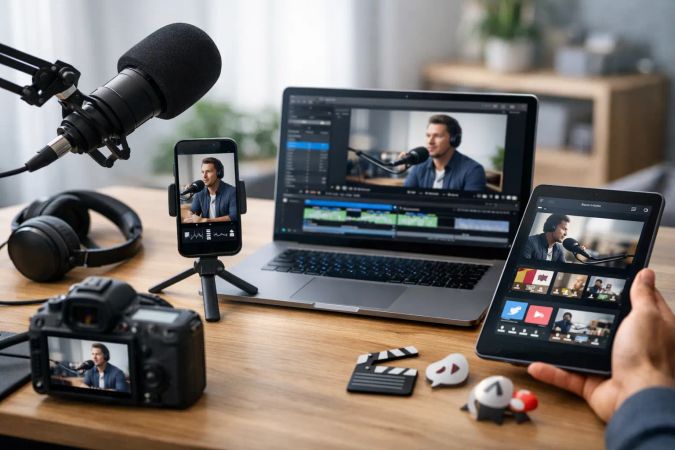
A single podcast episode can give you far more than one upload and a few social posts. If you're asking how to repurpose podcast clips, the real goal is not more content for its own sake. It is turning one recorded conversation into a set of assets that increases visibility, supports search performance, builds trust, and gives prospects more ways to find and evaluate your business.
That matters even more for professional service firms and B2B companies. If you work in law, finance, commercial real estate, logistics, or technology, your audience is not looking for entertainment first. They are looking for signs of expertise, consistency, and relevance. Well-planned podcast clips help you show all three without creating from scratch every week.
Why podcast clips matter more than full episodes alone
A full episode is valuable, but it asks for time and commitment. Most potential clients will not start with 30 or 45 minutes. They will start with a short moment that answers a specific question, presents a clear point of view, or shows how your team thinks.
That is where clips become commercially useful. A strong clip can introduce your brand in search results, in social feeds, in email, and on sales pages. It can help a prospect move from light awareness to serious consideration. It can also give your team reusable proof of expertise across multiple channels.
There is a trade-off here. Repurposing works best when the original episode is structured with clip potential in mind. If a recording is unfocused, overloaded with filler, or too casual for your market, your editing team has less to work with. Good repurposing starts before the cameras roll.
How to repurpose podcast clips with a strategy first
The most effective approach is to match clip types to business goals. Many companies skip this step and end up posting random highlights that look active but do very little. If your content is supposed to support lead generation, authority, and discoverability, each clip should have a job.
Some clips are built for reach. These are short, sharp, and easy to understand without much context. Others are built for authority. They may be slightly longer and focus on a strong explanation, industry prediction, or practical takeaway. A third category is built for conversion. These clips often address buyer concerns, common objections, or costly mistakes.
When you plan clip production this way, your library becomes more useful. Instead of one generic batch of social content, you create assets that serve different stages of the buyer journey.
Start by identifying the moments worth extracting
Not every sentence deserves to become a clip. The best moments usually fall into a few patterns. A guest makes a strong claim. A host explains a complex issue in plain language. Someone shares a mistake companies commonly make. A practical insight lands cleanly in under a minute.
Those moments are valuable because they stand alone. They do not require ten minutes of setup to make sense. For business audiences, clarity matters more than cleverness. A direct statement such as "Most firms lose leads because their content explains services, not outcomes" is more useful than a vague inspirational quote.
Edit for context, not just brevity
A common mistake is cutting clips as short as possible. Short is not automatically better. The right length depends on the platform, the subject, and the depth of the point being made.
If the clip is meant to grab attention, 20 to 40 seconds may be enough. If it is meant to establish authority, 45 to 90 seconds often works better. The key is to preserve meaning. A clipped sentence with no setup may create views, but it rarely creates trust.
This is especially true for industries where credibility is everything. An accounting firm, legal practice, or logistics company cannot afford to sound sloppy or oversimplified. Repurposing should tighten the message, not flatten it.
The best formats for repurposed podcast clips
Once you extract strong moments, the next question is format. One clip can become several assets if you adapt it for how people actually consume content.
Vertical video is usually the most flexible starting point. It works for social distribution, mobile viewing, and short-form discovery. If the original recording includes professional framing, clean lighting, and strong audio, the clip immediately feels more credible. That production quality matters more than many companies realize. In serious industries, audience perception is often shaped in the first few seconds.
A second format is captioned thought-leadership video. This is especially effective when your audience may watch on mute at first. Strong on-screen text helps communicate the point quickly while reinforcing your expertise.
A third format is turning the clip into written content. A 60-second segment can become a short article section, a quote graphic, email copy, or a search-focused page element. This is where repurposing becomes a multiplier instead of just a posting tactic. Your spoken expertise starts feeding your written content engine.
Turn one clip into channel-specific assets
The same clip should not be copied word-for-word everywhere without adjustment. A social post needs a stronger hook. An email may need one sentence of context. A website page may need framing around a service, problem, or client concern.
For example, a clip about common tax planning mistakes could work as a short video post, but it could also support a service page, a newsletter section, or a nurture sequence for prospects already in conversation with your firm. The source material stays the same. The packaging changes based on where the viewer encounters it.
That extra step is where a lot of value gets created. Repurposing is not just resizing media. It is aligning the message with intent.
How to repurpose podcast clips for SEO and discoverability
If your business wants stronger search performance, clips should not live only on social platforms. They should support owned content too.
Video clips can strengthen pages that answer real client questions. They can improve time on page, make complex topics easier to understand, and give search engines more context about your expertise when paired with relevant surrounding copy. They can also help your brand appear more current and active, which matters when prospects compare multiple providers.
Podcast clips are also useful for topic clustering. If your show covers recurring themes such as succession planning, market cycles, freight disruptions, or B2B sales strategy, each clip can reinforce those subject areas across your content footprint. Over time, that consistency helps build topical authority.
There is an important nuance here. Simply posting lots of clips will not automatically improve rankings. The topic relevance, supporting copy, page quality, and overall content structure still matter. Repurposed media works best when it is attached to a clear search strategy rather than treated as an isolated tactic.
Production quality changes how your expertise is perceived
A valuable insight can lose force if the clip looks improvised, sounds thin, or feels visually inconsistent with your brand. That is one reason more firms are treating video podcasts as a strategic content source instead of a casual side project.
When the original production is designed well, every downstream asset gets stronger. Audio is cleaner. Framing is sharper. Branding is more consistent. Editors have better raw material. The clips look like a company with a real point of view, not a business trying to keep up.
For companies in South Bay Los Angeles and surrounding business markets, this matters because the competition for attention is not just local anymore. Your prospects may compare your brand presence against firms across the region or across the country. Polished clips help level that field.
Build a repurposing workflow your team can sustain
The best system is the one your team can maintain consistently. That usually means deciding in advance how many clips come from each episode, what purpose each clip serves, and where it will be distributed.
A practical baseline is to pull a small set of high-value moments from every recording rather than chasing volume. One authority clip, one awareness clip, and one conversion-oriented clip is often more useful than eight generic excerpts. Quality compounds faster than quantity when the message is tied to business outcomes.
It also helps to tag clips by topic, funnel stage, and intended use. Over time, this gives your marketing team a searchable library instead of a pile of disconnected files. That library becomes useful for campaigns, sales enablement, website updates, and executive visibility.
A studio partner like Voxel Micro Video Labs can make that process more efficient because the content is captured with repurposing in mind from the start, not patched together after the fact.
What good repurposing actually looks like
If you are serious about how to repurpose podcast clips, think less like a publisher chasing impressions and more like a business building media assets. Every strong clip should answer one of these questions: Does it attract the right audience, strengthen trust, improve discoverability, or help move a prospect closer to a decision?
When the answer is yes, your podcast stops being a single piece of content and starts becoming a repeatable growth engine. And that is usually the difference between content that fills a calendar and content that helps close business.