How to Script Expert Videos That Build Trust
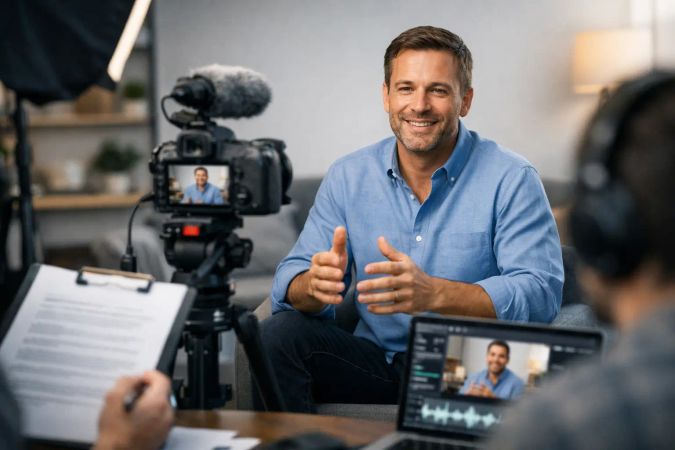
A weak expert video rarely fails because the speaker lacks knowledge. It fails because the knowledge arrives in the wrong order. The viewer gets context before relevance, caveats before clarity, and a long answer before they know why they should care. Learning how to script expert videos solves that problem by turning subject-matter expertise into a focused business asset - one that earns attention, builds trust, supports search visibility, and gives prospects a reason to start a conversation.
For professional service firms and B2B companies, the goal is not to sound rehearsed. It is to make a complex topic easy to understand without making it shallow. A well-built script creates that balance. It gives your expert a clear route through the topic while leaving room for the perspective, examples, and judgment that make the video credible.
Start With the Business Question, Not the Topic
“Cybersecurity,” “commercial real estate trends,” or “tax planning” are subjects, not video ideas. A subject is too broad to guide a viewer or a speaker. A useful expert video begins with a specific question a buyer, client, partner, or referral source is already asking.
Instead of planning a video on logistics, a Port of Los Angeles supplier might address, “What should importers ask before choosing a drayage partner?” Instead of a general legal update, a business attorney could explain, “What should a founder do when a business partner stops meeting their obligations?” The narrower question gives the video an immediate purpose and makes it more likely to match relevant search intent.
Before scripting, define three things in one sentence each: the audience, the problem they are trying to solve, and the action you want them to consider next. The action does not need to be a hard sales pitch. It may be to assess their current process, ask a better question, subscribe for future guidance, or schedule a conversation when the issue applies to them.
This step also protects your content calendar from becoming a collection of disconnected opinions. When each episode addresses a real business concern, your video podcast becomes a library of useful answers that can strengthen authority over time.
Use a Script Structure That Respects Busy Viewers
Most expert-led videos perform better when they follow a simple progression: tension, answer, evidence, application, and next step. This structure works because it answers the viewer’s silent question at every stage: “Why should I keep watching?”
Open with a specific tension
The first 10 to 20 seconds should name a costly misconception, a change in the market, or a decision with consequences. Avoid opening with a biography, company history, or a broad statement such as “This is a very important topic.”
A stronger opening sounds like this: “If your lease renewal is coming up, waiting until the final quarter to review your options can eliminate leverage you did not know you had.” It identifies the moment, the risk, and the reason to listen.
The hook should be accurate, not sensational. Trust-centered industries cannot afford exaggerated claims just to earn a click. The most effective tension is often practical: a missed deadline, an overlooked cost, a compliance risk, or a mistaken assumption that affects a business decision.
Give the answer early
Do not make the viewer wait two minutes for the main point. State your position near the beginning, then explain it. An accounting firm might say, “The right entity structure depends less on the size of your revenue than on ownership, risk exposure, and how you expect to reinvest profits.”
Giving the answer early signals confidence. It also helps viewers who find your content through search, social clips, or AI-generated results get a usable response quickly. They may not watch the full episode on the first visit, but clarity makes them more likely to return.
Prove the point with practical evidence
Expertise becomes persuasive when it is visible. Use a brief anonymized scenario, a contrast between two choices, a process breakdown, or a common pattern you see in client work. The goal is not to disclose confidential details or overload the audience with data. It is to show how your thinking works.
For example, a commercial real estate advisor could contrast a tenant that starts planning 12 months before renewal with one that starts 90 days out. The distinction makes the advice concrete and gives the audience a way to recognize their own position.
Translate the insight into action
Viewers should leave with a practical next move. That might be a question to bring to their CPA, a document to review, a metric to monitor, or a deadline to put on the calendar. Keep the advice within your professional and regulatory boundaries. In legal, financial, and tax content, scripts should make clear when general education is not individualized counsel.
End with a natural next step tied to the episode. If the video explains signs a company has outgrown its current financial reporting process, invite viewers facing those signs to get a professional assessment. A relevant call to action feels helpful. A generic “contact us today” after every episode can weaken the authority you just worked to establish.
How to Script Expert Videos Without Making Experts Sound Scripted
The best script format depends on the speaker. Some executives can work from a concise outline. Others need a full draft before they feel comfortable on camera. Neither approach is automatically better. The right choice is the one that produces clear, accurate delivery without draining the speaker’s energy.
For most video podcasts and thought-leadership segments, create a hybrid script. Write the opening hook, the central answer, any sensitive claims, statistics, required disclosures, and the closing call to action word for word. Then use short prompts for the explanation, examples, and transitions.
A prompt should be a thought, not a paragraph. “Explain why timing affects lease leverage” is useful. “Talk about lease renewal timing” is too vague. The first prompt tells the expert what point matters; the second invites wandering.
Write in spoken language. Shorter sentences are easier to deliver and easier to understand. Replace stacked jargon with the terms your clients actually use in meetings. If a technical phrase is necessary, define it once and move forward. The script should sound like the expert at their clearest, not like a white paper being read aloud.
One useful test is to read the draft out loud at a normal pace. Any sentence that feels awkward in the mouth will likely feel awkward on camera. Mark natural pauses, simplify clauses, and remove repeated ideas. A 90-second concise video can produce more impact than a six-minute explanation that buries its own message.
Build Each Episode for Search and Repurposing
A strategically scripted video has more than one destination. The full episode may live on your website, a video podcast channel, a sales follow-up sequence, or an executive’s professional social presence. Short clips can highlight a single insight, while a transcript can support related written content and help search systems understand the subject matter.
That does not mean forcing keywords into every sentence. It means using the real language prospects use when researching a problem. If a South Bay logistics company serves importers concerned about port congestion, the script should naturally address the operational terms and questions those importers use. Specificity supports discoverability because it gives search engines and viewers a clearer signal about who the content is for.
Plan the script around one primary question and two or three clip-worthy moments. These moments are usually a sharp opinion, a useful contrast, or a concise explanation of a mistake. Do not interrupt the full episode with artificial sound bites. Instead, look for statements that stand on their own when edited into a 30- to 60-second segment.
Consistency matters more than trying to cover every topic in one production day. A recurring format - such as a monthly market briefing, a client question series, or executive interviews - helps audiences recognize what they will get from your brand. It also gives your team a repeatable production process and a growing catalog of search-oriented media.
Review for Accuracy, Risk, and Buyer Relevance
Before recording, review every script through three lenses. First, is the information accurate and current? Second, does it create legal, compliance, confidentiality, or reputational risk? Third, does it matter to the buyer you want to reach?
Experts often want to include every exception because they understand the full complexity of the issue. Some nuance is essential, particularly in regulated industries. But not every exception belongs in the first video. State the principle clearly, acknowledge when circumstances vary, and create a separate episode for the deeper edge case if it is important.
Also remove internal language that prospects will not understand. Your audience does not need a tour of your organization chart or proprietary methodology before they receive value. They need evidence that you understand the decision in front of them.
A production partner can help pressure-test that clarity. At Voxel Micro Video Labs, the focus is not simply recording polished footage. It is shaping expert conversations into credible, reusable video content that supports visibility, authority, and lead generation.
The strongest script is one your expert can deliver with conviction and your audience can use immediately. Choose a question your buyers genuinely care about, make the answer clear early, and let the camera capture the judgment that only real experience can provide.