San Pedro Video Podcast Studio for B2B Growth
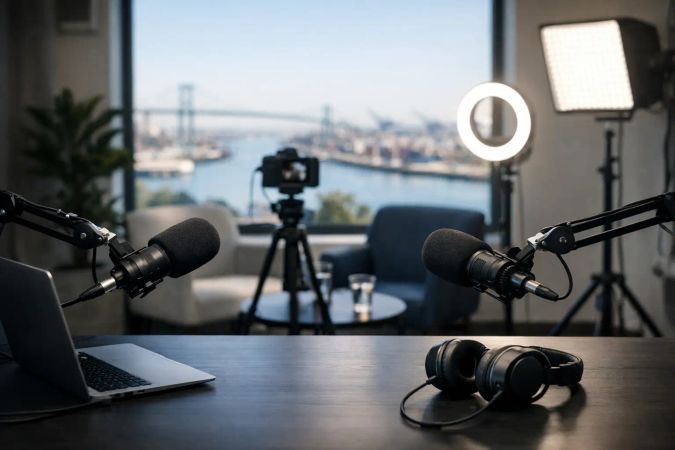
A San Pedro video podcast studio is not simply a place to record interviews. For a commercial real estate advisor, maritime services firm, attorney, technology company, or financial professional, it can become a practical engine for turning hard-won expertise into content that earns attention long after the cameras stop rolling.
The difference is strategy. A polished episode that has no clear audience, topic focus, or distribution purpose may look credible but produce little business value. A well-planned video podcast creates a library of authoritative answers to the questions prospective clients already ask, strengthening trust, search visibility, and sales conversations at the same time.
Why Video Podcasts Work for Trust-Based Businesses
Professional services buyers rarely make decisions after seeing one promotional message. They research providers, compare expertise, look for evidence of relevance, and often need confidence before they make contact. Video podcasts support that process because they let prospective clients see how a leader thinks, explains complex issues, and responds to industry change.
For businesses serving the Port of Los Angeles Harbor Area and South Bay, this matters. Shipping, logistics, legal, finance, tax, commercial property, and B2B technology are fields where credibility is built through precision. A concise discussion on changing regulations, market conditions, risk management, financing options, or operational challenges can do more to establish authority than a generic company overview.
The format also gives executives a more natural way to communicate. Many subject-matter experts are not interested in reading a tightly scripted sales message into a camera. They are, however, comfortable discussing their work with a knowledgeable host, a client, a partner, or another industry professional. The conversation format draws out the details and judgment that make their expertise valuable.
What a San Pedro Video Podcast Studio Should Deliver
A useful studio experience starts before recording day. The goal is not to fill an hour with conversation. It is to produce a focused business asset with a clear job to do: attract a defined audience, explain a relevant issue, reinforce brand authority, or move qualified prospects closer to a conversation.
Professional Production That Protects Credibility
Production quality affects how viewers interpret the message. Poor audio, inconsistent lighting, distracting backgrounds, and awkward framing can make even excellent ideas feel less reliable. That is especially costly for firms that compete on judgment, experience, and professional standards.
A controlled studio environment delivers clean audio, intentional lighting, camera angles that flatter the speakers, and a consistent visual presentation from one episode to the next. Consistency matters because recurring content should look like a deliberate brand platform, not a collection of unrelated experiments.
High production value does not mean making the content overly formal. The best business video podcasts feel composed but conversational. Viewers should see a brand that is prepared, credible, and easy to engage.
Messaging That Serves a Business Goal
The strongest episodes begin with a specific audience question. A logistics provider might address how importers can reduce delays. A business attorney might discuss contract risks that emerge during rapid growth. An accounting firm might explain tax planning decisions owners should make before year-end.
These topics work because they are useful before they are promotional. They demonstrate capability without forcing a sales pitch. When the right buyer later needs help, the company that clarified the issue first has an advantage.
A good production partner helps shape broad ideas into episodes with a sharper point of view. That includes defining the intended viewer, creating a compelling episode angle, outlining talking points, and deciding what action should follow the episode. The call to action may be modest: encourage a consultation, invite a response, promote an upcoming event, or direct viewers to a related service. It should fit the conversation rather than interrupt it.
Content Built for Search and Reuse
A full video episode is valuable, but it should not be the only deliverable. One well-structured recording session can support a longer episode, short social clips, topic-focused excerpts, quote graphics, article ideas, email content, and sales enablement material.
That reuse is where recurring video podcasts become efficient. Rather than inventing a new campaign from scratch every month, a company builds a connected body of media around its core expertise. Over time, the content can cover the questions, objections, trends, and use cases that shape buying decisions.
Search-oriented planning increases the return. Episode titles, descriptions, speaker introductions, on-screen themes, transcripts, and supporting written content should align with the language buyers use when researching a problem. This supports traditional search performance and helps make a company's expertise more understandable to emerging AI-driven and generative search experiences.
Choosing Topics That Attract the Right Prospects
Not every popular topic will attract the right clients. A video podcast designed for business growth should prioritize relevance over broad entertainment value. The most effective subjects usually sit at the intersection of audience pain points, company expertise, and current market demand.
For example, a commercial real estate team could discuss lease negotiation mistakes, industrial vacancy trends, or how businesses should evaluate a new facility. A cybersecurity provider could explain the first steps after a vendor security incident. A chamber or association could bring local business leaders together to address workforce, trade, or economic development issues.
There is also value in featuring credible guests. Client partners, complementary service providers, community leaders, and industry specialists can expand reach while giving the audience a more complete view of a topic. The trade-off is control. Guest-driven episodes require stronger preparation to keep the discussion useful, accurate, and aligned with the brand's goals.
A practical editorial plan balances evergreen and timely episodes. Evergreen content answers questions that will remain relevant for months or years. Timely episodes respond to regulatory shifts, market conditions, local developments, and industry news. A business that only covers timely news can create content that expires quickly. One that only produces evergreen material may miss opportunities to demonstrate current relevance.
Studio Preparation Makes Recording More Efficient
Executives do not need media training to be effective on camera, but they do need preparation. The most common mistake is trying to memorize a script word for word. That usually produces stiff delivery and makes minor mistakes feel larger than they are.
A better approach is to prepare a conversational outline. Identify the central question, three to five key points, supporting examples, and the desired next step for viewers. Speakers should know the destination of the conversation without trying to recite every sentence.
Recording in batches can also protect executive time. Instead of scheduling a full production setup for each episode, a business can capture several focused conversations in one session. This approach supports content consistency while reducing scheduling friction. It works particularly well for firms with multiple partners, department leaders, or subject-matter experts who can each contribute a distinct perspective.
The right cadence depends on internal capacity. Monthly episodes are realistic for many B2B organizations. Others may benefit from a short quarterly series tied to a campaign, industry event, recruiting initiative, or major market theme. Consistency is more valuable than ambitious frequency that fades after three recordings.
How to Measure More Than Views
Views are useful, but they are not the full measure of a business podcast. A short clip that reaches fewer people but starts conversations with ideal prospects may outperform a high-view video that attracts an audience with no buying relevance.
Track signals that connect content to business outcomes: watch time, repeat viewers, audience engagement, website visits from video content, consultation inquiries, newsletter signups, sales-team use, and mentions from partners or prospects. Ask new leads how they found the company and whether a video helped them understand the firm's expertise.
Over time, patterns will appear. Certain topics may attract decision-makers from a target industry. Some speakers may generate stronger engagement. A recurring question may point to a service page, webinar, or future episode worth developing. These insights allow the content strategy to become more precise rather than simply more frequent.
A Studio Partner Should Understand the Commercial Stakes
A studio can provide cameras and microphones. A strategic video partner should also understand why a managing partner, founder, or marketing leader is investing time in the first place. The work should support positioning, search visibility, relationship-building, lead generation, and a stronger sales process.
That requires balancing polish with speed, strategy with authenticity, and long-form conversations with short-form distribution. It also requires a production process that respects executive schedules and helps specialized industries communicate clearly without flattening their expertise into generic marketing language.
Voxel Micro Video Labs approaches video podcasts as a repeatable brand asset for businesses that want to be found, trusted, and remembered. For organizations with real expertise but limited capacity to turn it into recurring media, the right studio process makes the next conversation easier: choose the question your best prospects need answered, put the right expert in the chair, and keep building from there.