Torrance Business Podcast Studio for B2B Growth
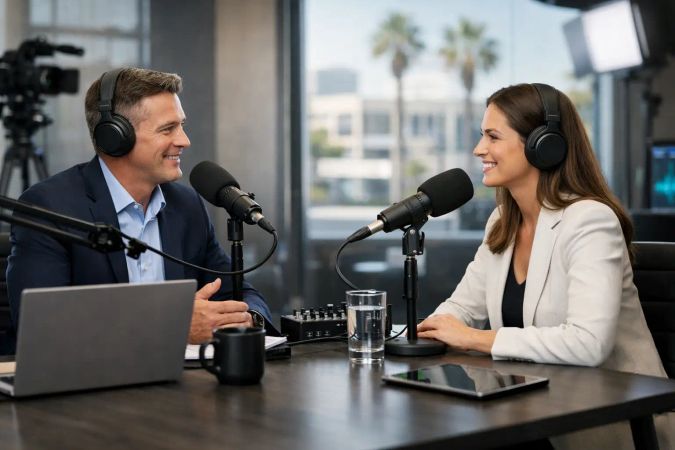
A strong point of view can sit inside a company for years without ever reaching the people who need to hear it. A Torrance business podcast studio gives that expertise a professional setting, a repeatable production process, and a format built for more than views. For B2B firms, professional service providers, and growth-minded local companies, video podcasting can turn the knowledge already inside the business into visible proof of authority.
That matters when prospective clients are comparing firms long before they request a meeting. They are searching for answers, reviewing leadership teams, watching short clips, and deciding who seems credible enough to trust with a significant decision. A polished video podcast creates an ongoing body of evidence that your company understands the market, the challenges, and the stakes.
https://youtu.be/400GLDUFA54?si=t9L9QqXIwuXUdebT
Why a Torrance Business Podcast Studio Is a Marketing Asset
A business podcast should not be treated as a side project for filling social media calendars. It is a content engine. One well-planned recording session can produce a full-length video episode, shorter clips, audio segments, articles, sales follow-up materials, and subject-specific pages that support search visibility.
For a commercial real estate advisor, that might mean a conversation about lease renewals, industrial availability, or tenant improvement negotiations. For a logistics company near the Harbor Area, it could be a practical discussion about supply chain planning, port activity, or distribution constraints. A CPA firm may answer common questions about business entity planning or tax deadlines. These are not entertainment topics. They are high-trust topics that help the right prospect evaluate your expertise.
Studio production also changes the perceived quality of the message. Clear sound, flattering lighting, professional camera framing, and a focused set communicate preparation. The goal is not to make every executive look like a media personality. The goal is to make important expertise easy to watch, understand, and believe.
Video Podcasts Create More Than One Piece of Content
The biggest advantage of a video podcast is efficiency. Executive teams often have limited time, yet they need a consistent presence across search, social channels, sales materials, and email. Recording a thoughtful 30- to 45-minute conversation can create months of usable marketing assets when it is planned around specific business questions.
The long-form episode gives your audience depth. It allows a managing partner, founder, or subject-matter expert to explain nuance that would be lost in a short post. This is particularly valuable in legal, financial, technology, and technical service categories, where trust comes from demonstrating judgment rather than repeating broad claims.
Short clips create the distribution layer. A concise segment about a timely issue can reach prospects who would never commit to a full episode at first. The best clips do not simply contain a catchy quote. They answer a real question, challenge an assumption, or explain a costly mistake.
The transcript and related written content add another layer of discoverability. Search engines and AI-driven answer tools need clear context to understand what a business knows and whom it serves. A well-structured episode, supported by accurate text and topic-focused supporting assets, gives your expertise more opportunities to appear when buyers research relevant problems.
This is why video podcast marketing works best as a system. The camera recording is the source material, not the finish line.
Start With Buyer Questions, Not Episode Titles
Many companies lose momentum because they begin with vague concepts such as “leadership insights” or “a conversation with our team.” Those ideas may sound appropriate, but they do not provide a clear reason for a prospect to watch.
A better starting point is the questions prospects ask before they hire you, the concerns that slow down a sale, and the misconceptions your team corrects every week. A law firm might address what business owners should prepare before a dispute becomes litigation. A commercial lender might explain which financial indicators affect financing options. A managed IT provider could discuss the operational risks hidden in outdated security policies.
Those topics are specific enough to be useful and broad enough to remain relevant. They also create a natural bridge to your services without turning the conversation into a sales pitch.
Choose a Repeatable Format
Consistency is more valuable than novelty for most business podcasts. A repeatable format reduces preparation time, helps executives become more comfortable on camera, and gives the audience a recognizable experience.
An interview format works well when your company can bring in clients, industry partners, or internal experts with distinct perspectives. A host-led briefing can be better for firms that need direct, concise explanations from a single authority. Panel discussions can add range, but they require stronger moderation and more careful audio planning.
The right choice depends on the business. An attorney discussing sensitive issues may prefer a controlled host-and-expert format. A chamber, association, or regional business organization may gain more value from interviews that connect its members and community. The format should serve the message, not create extra production complexity.
What Makes a Business Podcast Worth Watching
High production standards matter, but polish alone will not generate qualified leads. An effective episode needs a useful premise, a clear audience, and a point of view that reflects the company’s real experience.
Preparation is where that value is created. Before recording, identify the viewer you want to reach, the problem they are trying to solve, and the action you want them to consider after watching. That action might be scheduling a consultation, sharing the episode internally, subscribing for future insights, or simply recognizing your company as a credible option.
Avoid scripting every sentence. Over-scripted executives often sound detached from the expertise they are trying to share. Instead, use a structured conversation outline with key questions, supporting examples, and a clear opening and close. This keeps the discussion focused while leaving room for natural, credible answers.
A strong producer also manages the details that can undermine a recording: pacing, interruptions, microphone placement, guest comfort, visual continuity, and the tendency to wander into jargon. These details are easy to overlook during an internal recording and difficult to fix after the fact.
The Trade-Off Between Frequency and Quality
Some businesses assume they need a new episode every week to compete. That can be useful for organizations with a dedicated content team and a steady pipeline of timely topics. For many professional firms, however, a monthly or twice-monthly schedule is more realistic and more sustainable.
A consistent monthly series with informed guests and strategic distribution usually outperforms a rushed weekly show that lacks a defined audience. The key is to create enough material in each session to support the full marketing calendar. Batch recording can help leadership teams protect their time while maintaining a steady release schedule.
There is also a trade-off between broad appeal and qualified appeal. A general topic may attract more casual views, while a highly specific topic may reach fewer people but generate stronger conversations with ideal prospects. Businesses selling complex or high-value services should usually prioritize relevance over vanity metrics.
Local Context Can Strengthen Authority
For South Bay and Harbor Area companies, local context can make a podcast more credible when it is genuinely connected to the work. Discussions about regional commercial development, port-adjacent logistics, local business regulations, workforce needs, or industry events show that a company understands the environment in which its clients operate.
That does not mean every episode needs to mention Torrance, San Pedro, Long Beach, or Los Angeles. Forced local references weaken the message. Use location when it adds practical context, introduces relevant guests, or helps explain a market condition that affects the audience.
A Torrance business podcast studio is especially useful for companies that want a professional recording environment without building and managing an in-house set. It gives leaders a dependable place to show up, record efficiently, and create a recognizable visual standard across episodes.
Measure Business Value Beyond Views
View count is easy to see, but it rarely tells the full story. A video with a modest audience may be highly valuable if it reaches decision-makers, helps sales teams answer objections, or supports an important search term.
Look at the quality of engagement. Are prospects mentioning episodes during discovery calls? Are sales representatives using clips in follow-up messages? Are website visitors spending more time with your expertise? Are referral partners sharing a relevant conversation with their own network? These signals often matter more than broad reach.
A strategic studio partner can also help connect production decisions to business goals. Voxel Micro Video Labs approaches video podcasting as a brand amplification and discoverability asset, helping organizations turn specialized knowledge into polished media that supports trust, search performance, and lead generation.
The best first episode is rarely the most ambitious one. Start with the conversation your team has already explained a hundred times, make it clear enough for a prospective client to act on, and build the next episode from the questions it creates.