El Segundo Executive Video Production That Performs
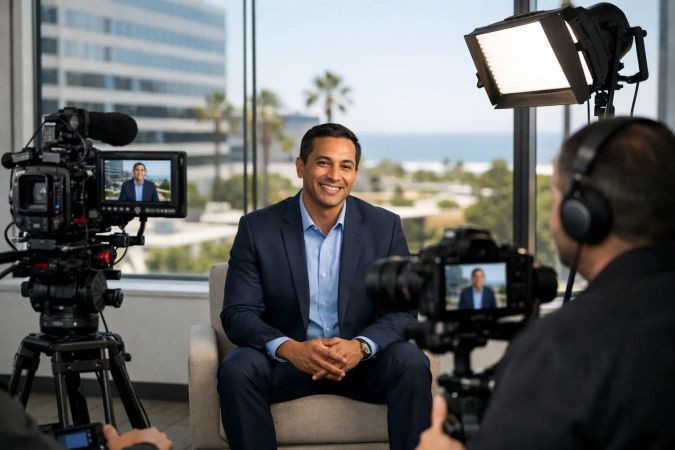
A CEO explaining a market shift, a real estate principal discussing deal strategy, or a logistics leader addressing supply-chain risk can create more trust in five focused minutes than a month of generic social posts. That is the business case for El Segundo executive video production: not producing video for its own sake, but turning credible expertise into media that helps the right people find, evaluate, and contact your company.
For executive teams, the standard is higher than a polished camera image. The message has to sound informed, the format has to respect limited time, and each production needs a clear commercial purpose. A strong executive video can support thought leadership, search performance, sales conversations, recruiting, client education, and reputation at the same time. The best approach is usually not a one-off brand film. It is a repeatable content system built around what your leaders already know.
Why Executive Video Carries More Weight
Business buyers are cautious, particularly in professional services and B2B industries. They are not only comparing capabilities. They are deciding whether a firm understands their problem, communicates clearly, and can be trusted with a consequential decision.
Executive-led video puts a real point of view behind the brand. A tax advisor can clarify the implications of a regulatory change. A commercial real estate team can explain local tenant demand. A technology executive can frame a difficult implementation decision in practical terms. These subjects are more credible coming from the people accountable for the work than from an anonymous block of marketing copy.
That credibility also has a search value. Well-planned videos create useful language around the questions prospects actually ask. Titles, descriptions, transcripts, clips, and supporting page copy give search engines more context about the subjects your company owns. For companies pursuing visibility in both conventional search and generative search experiences, specificity matters. Broad statements about being a trusted leader do very little. Clear, substantive answers to real industry questions can continue working long after the recording day.
El Segundo Executive Video Production Needs a Business Case
El Segundo is home to companies operating in aerospace, technology, professional services, commercial real estate, logistics, and adjacent sectors. Many of these businesses have serious expertise but face the same content challenge: leaders are busy, internal marketing teams are lean, and the material must be accurate enough to protect the brand.
A successful production begins before cameras roll. The first question is not, “What would look good?” It is, “What business outcome should this content support?” The answer may be improving visibility for a specialized service, helping sales teams handle a recurring objection, demonstrating leadership in a changing market, or creating a stronger pipeline of qualified leads.
The purpose shapes the format. If a company wants broad brand awareness, a concise executive message may be appropriate. If it wants to establish authority around complex topics, a video podcast or interview series will usually create more useful depth. If the sales team needs decision-stage assets, focused videos addressing common buyer concerns can outperform a general company overview.
The trade-off is straightforward. A highly produced single video can make a strong first impression, but it has a limited shelf life if it is not supported by related content. A recurring series requires greater consistency from leaders, but it builds a larger library of searchable, reusable marketing assets. For most expertise-driven organizations, the recurring model delivers more cumulative value.
Video Podcasts Turn Knowledge Into a Content Engine
Video podcast marketing is especially effective for executives who have insight but do not want to memorize scripts or perform for the camera. A structured conversation makes room for nuance. It lets a host draw out useful stories, challenge assumptions, and translate technical knowledge into language a prospect can understand.
One well-run episode can become more than a full-length conversation. It can provide short topic clips for social channels, transcript-based web content, sales follow-up material, quotes for newsletters, and themes for future articles or webinars. This is not content multiplication for vanity metrics. It is a way to get greater value from a leadership team’s limited time while keeping the brand’s message consistent.
The strongest executive podcasts avoid vague discussions about leadership or innovation. They focus on questions with real decision value. A maritime services firm might discuss how shippers should assess port disruption risk. A law firm might address the mistakes business owners make before entering a dispute. An accounting practice might explain what owners should prepare before a significant transaction.
Those topics help prospects identify the company’s expertise before they make contact. They also give a sales team something more valuable than a brochure to share after a first conversation: proof that the company has considered the issue in depth.
A Better Recording Process for Busy Leaders
Executives do not need more meetings disguised as content strategy. They need an efficient production process that removes uncertainty. That starts with a short planning conversation that identifies the audience, subject, desired outcome, approved talking points, and areas to avoid.
Preparation should create confidence, not over-script the speaker. A detailed script may be appropriate for a formal brand statement or tightly regulated subject. For most video podcasts and expert interviews, a discussion outline produces a more natural result. The goal is to help leaders speak with clarity while preserving the judgment and personality that make their perspective credible.
A studio environment also matters. It reduces technical variables, creates reliable sound and lighting, and gives the brand a consistent visual standard across episodes. For companies that need ongoing content, that consistency strengthens recognition and makes future recording days easier to schedule.
What Makes Executive Content Useful After Production
A finished video is not automatically a marketing asset. Its value depends on whether it is organized, positioned, and distributed for the audiences it needs to reach.
Start with the full episode or executive feature as the source asset. Then identify concise segments that each answer one question, make one informed point, or introduce one relevant perspective. A clip should stand on its own without requiring viewers to watch 30 minutes of context. It also needs an opening that earns attention quickly, especially when used on professional social platforms.
Next, connect the content to the company’s search strategy. Use topic language that reflects the services, industries, and problems the business wants to be known for. The transcript should be accurate and readable. The supporting copy should clarify the video’s relevance, rather than repeating the same empty promotional claims found across many corporate pages.
Distribution should match buyer behavior. LinkedIn may be the primary channel for a B2B advisory firm, while a local service business may get more value from video embedded on key service pages and used in sales follow-up. There is no single channel that works for every company. The right mix depends on where prospects research, how long their buying cycle lasts, and what level of trust they need before engaging.
Measure More Than Views
Views can be useful, but they are an incomplete measure for executive content. A video aimed at a specialized buyer may never generate mass reach, and it does not need to. If it helps the right decision-maker understand a complex service, reinforces a sales conversation, or improves qualified traffic to an important page, it is doing its job.
Better measures include video engagement from target audiences, search impressions for priority topics, visits to relevant service pages, inbound inquiries, sales enablement use, and the quality of conversations that follow. Marketing leaders should also pay attention to content efficiency. If one studio session creates an episode, several clips, searchable page content, and a month of professional social material, that is a more meaningful return than a single post with temporary engagement.
The time to begin is when your leadership team has expertise worth documenting, not when the market becomes crowded with louder competitors. A focused recording session can turn that expertise into a durable asset library. Voxel Micro Video Labs helps businesses make that transition with executive content designed to look credible, sound authoritative, and contribute to stronger visibility and lead generation.